Free tools
Open to every VCE student.
Calculators
For working things out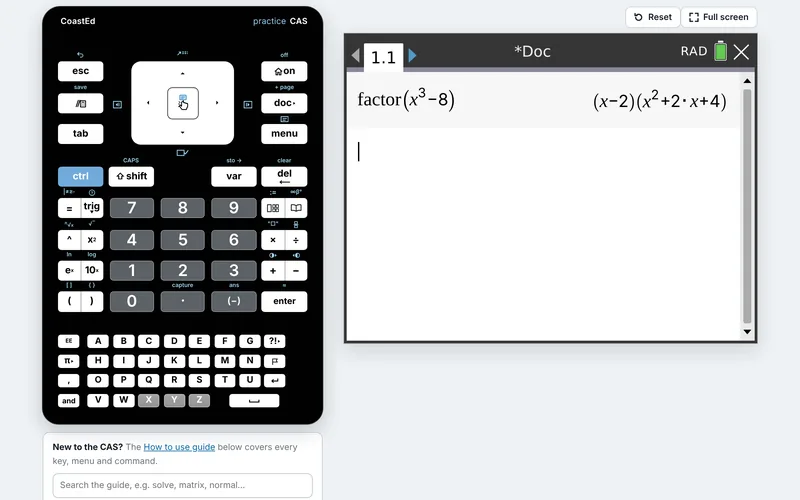
CAS calculator
Solve, factorise, expand, differentiate, integrate and graph in your browser, with exact answers.
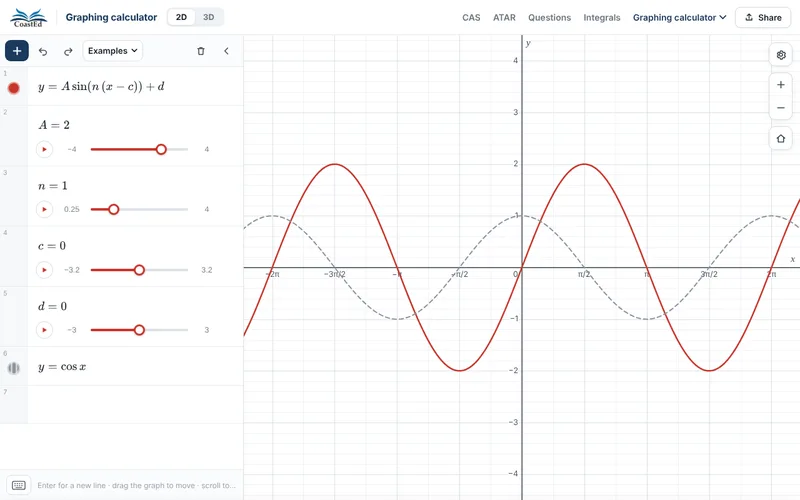
Graphing calculator
Graph functions, equations, inequalities, polar and parametric curves. Add sliders, drag points, and tap a graph for its intercepts, turning points and intersections.
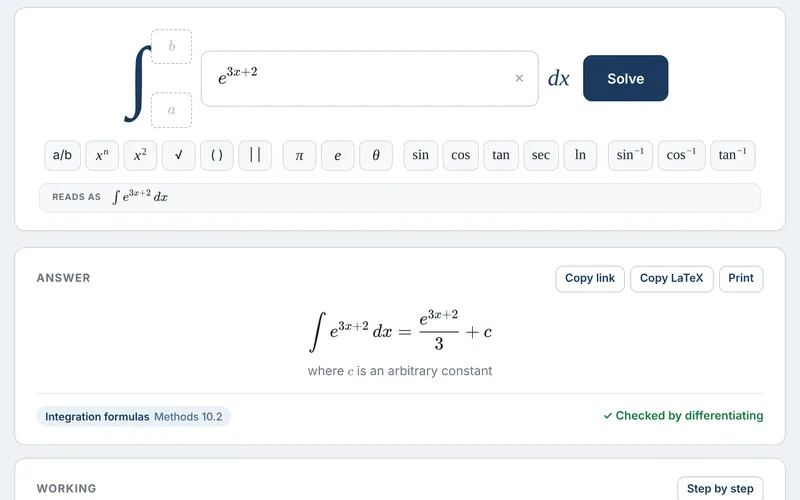
Integral calculator
Type any integral and get full working using only Methods and Specialist techniques, laid out like the CoastEd notes. It tells you when one can't be done by hand.
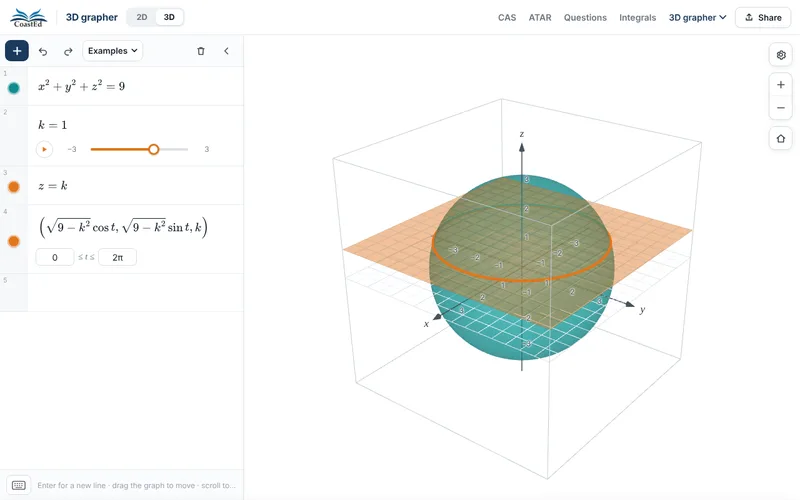
3D grapher
For Specialist: graph surfaces, planes, spheres, vector lines and parametric curves in 3D, then spin them around.
Plan your VCE
Exam practice, scores, schools and the study design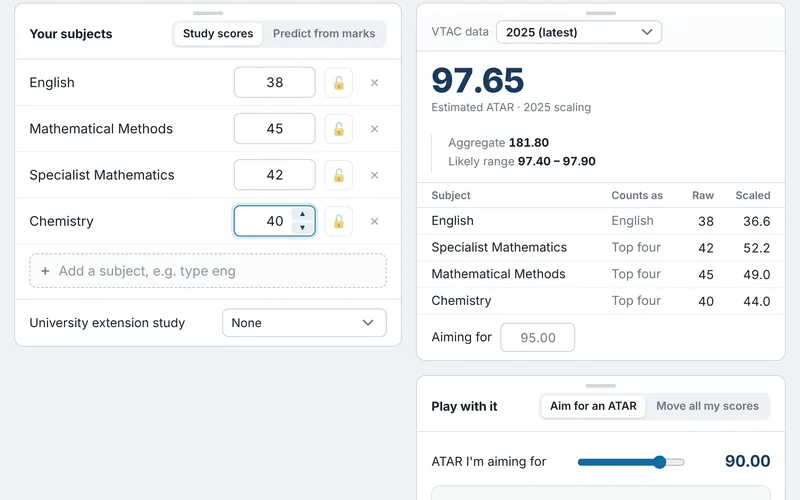
ATAR & study score calculator
Turn exam marks into a study score, and study scores into an ATAR, using VTAC's 2020–2025 scaling and VCAA's grade data.
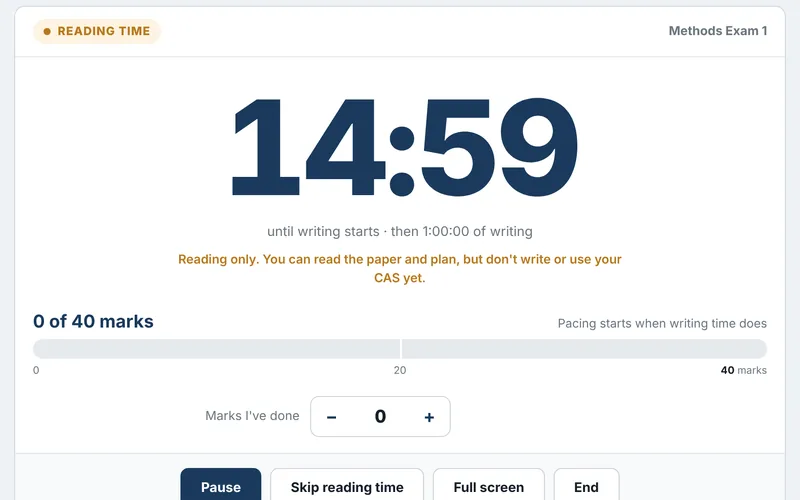
Exam timer
Keep it open during practice exams. It runs the 15 minutes of reading time, then writing time, with a pacing bar showing how many marks you should have done by now.
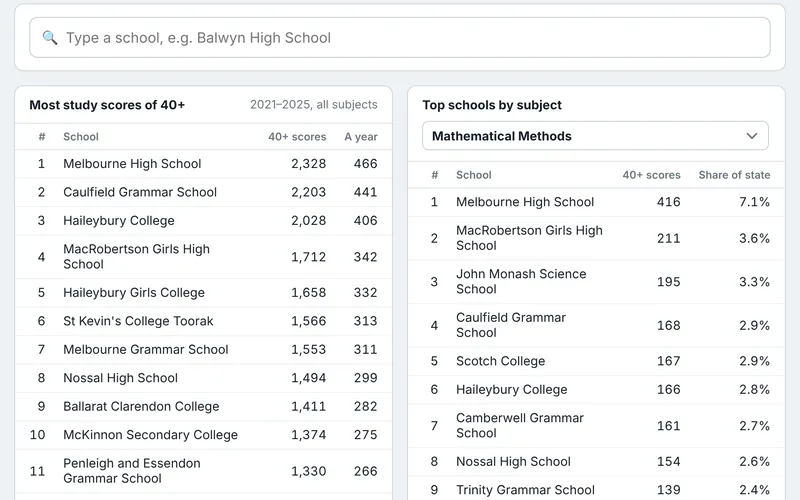
School results explorer
Look up any school's VCE honour roll results: how many 40+ study scores it gets, its strongest subjects, how its top students score and how it compares with similar schools.
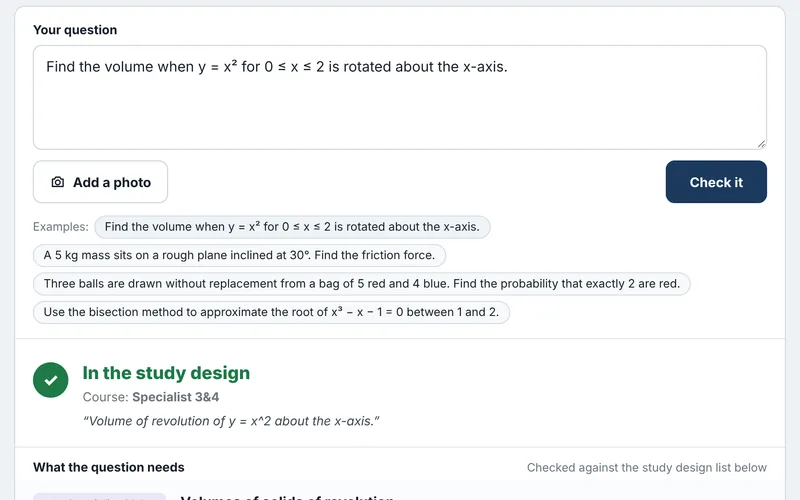
Is it in the study design?
Type a topic or snap a photo of a question to see if it's in Methods or Specialist Units 3&4. Great for old papers and trial exams that go off-course.
Practise
Fresh questions and quick drills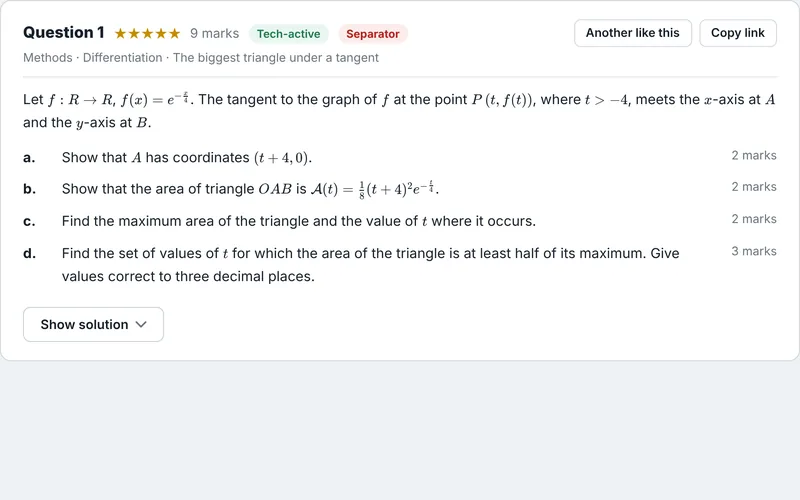
Question & separator generator
Fresh Methods and Specialist practice questions, from the basics to exam separators, with full worked solutions and marks.
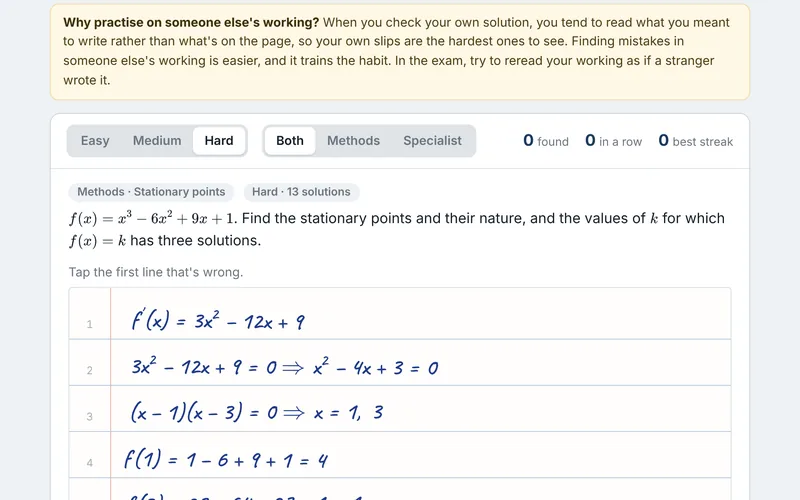
Spot the error
A worked solution in handwriting with one deliberate mistake. Tap the line where it first goes wrong. The mistakes are the ones VCAA examiners' reports flag most, for Methods and Specialist.
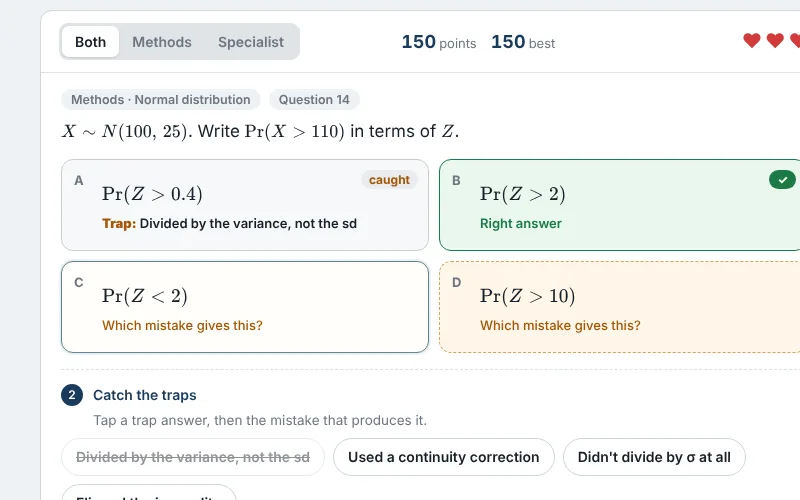
Trap match
Four answers, one right. The other three are what the most common VCE mistakes give you. Pick the right one, then match each trap to the mistake behind it. Three hearts, streak bonuses.
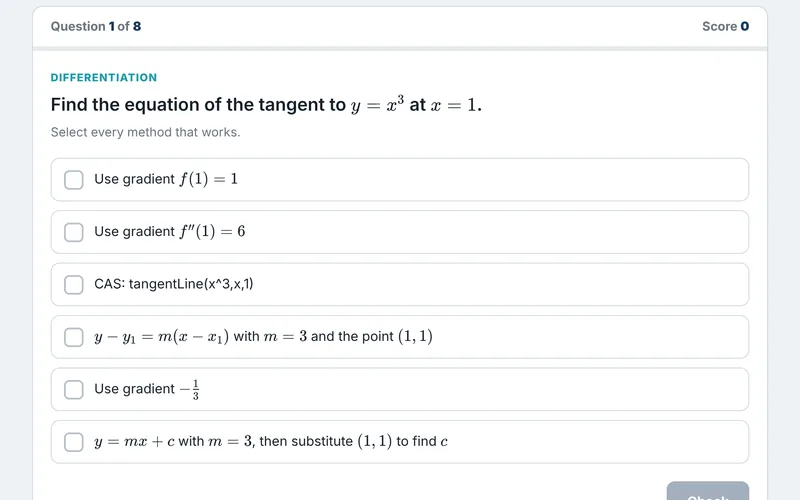
Every way
A game: for each Methods or Specialist question, pick every method that works. Learn the other ways to check an answer, and why the tempting wrong ones fail.
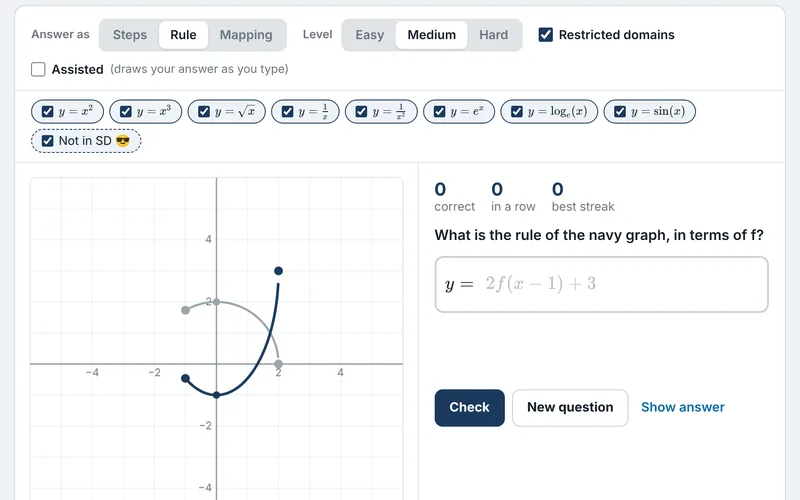
Transformations
See y = f(x) and its image, then describe the transformation: as steps (dilations, reflections, translations), as a rule like 2f(x−1)+3, or in mapping notation.
Explore
Drag things around and see the maths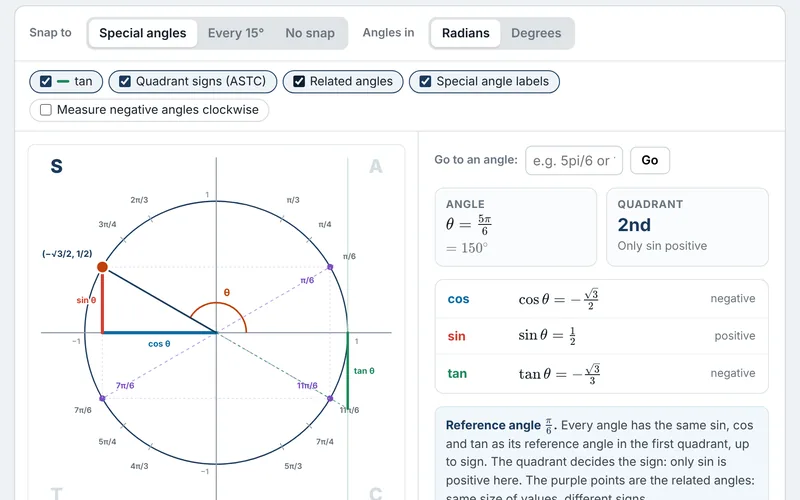
Unit circle
Drag a point around the unit circle and watch sin, cos and tan as lengths, with exact values at the special angles, quadrant signs, related angles and the matching graphs.
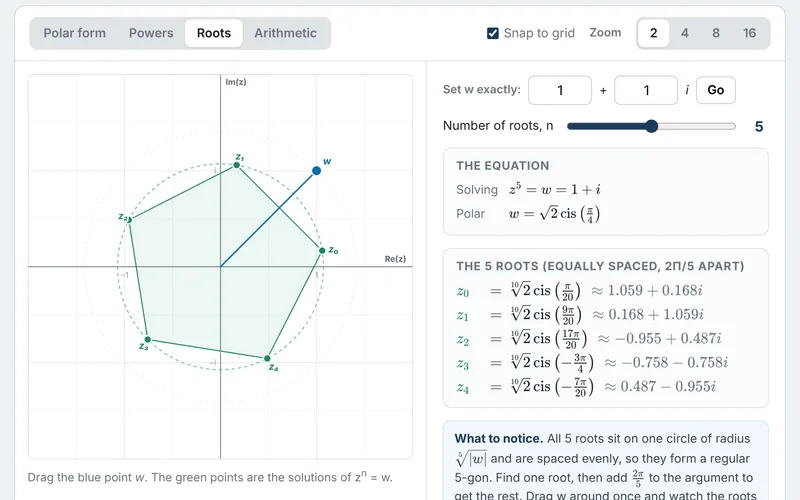
Argand diagram playground
For Specialist complex numbers. Drag z around and watch its polar form, its powers and the nth roots draw themselves, plus what adding, multiplying and dividing look like.
Games
Maths you play, on your own or against friends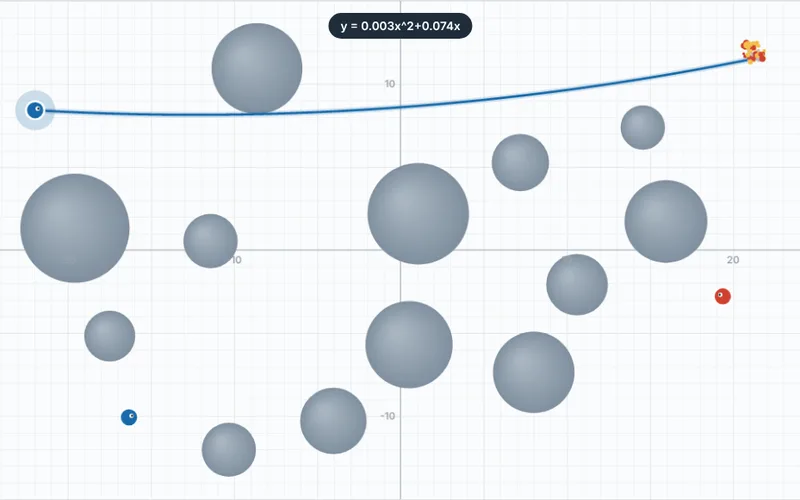
Graph battle
A two-player maths game: type a function and your shot flies along its graph. Bend it round the rocks to hit the other team. Play a bot, a friend on the same device, or online.
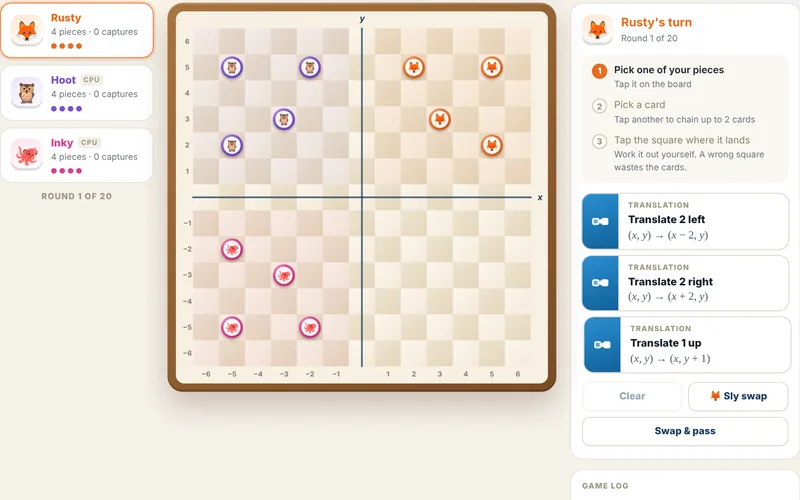
Transform Tactics
A strategy board game for 2 to 4 players: online with everyone on their own phone, pass-and-play, or against the computer. Pick a character, then play reflection, translation and dilation cards to capture everyone else's pieces.
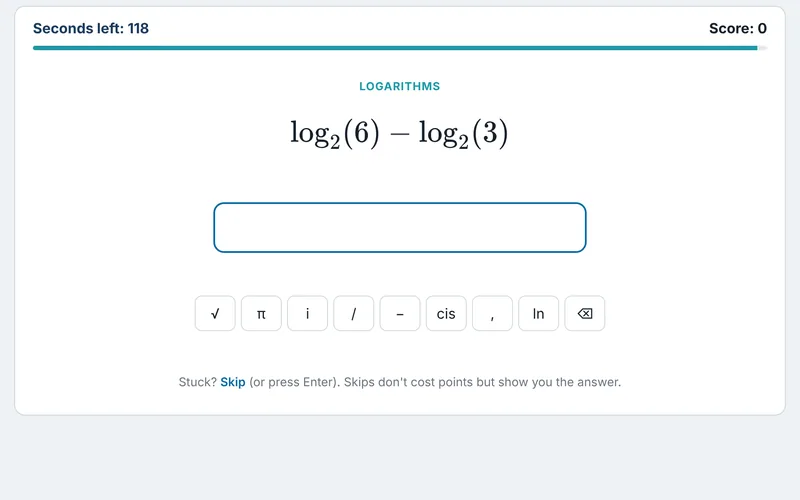
Speed maths
Like Zetamac, for VCE. Race the clock on fractions, exact values, logs, polar to Cartesian, complex arithmetic and more. Pick Methods or Specialist and choose what to include.
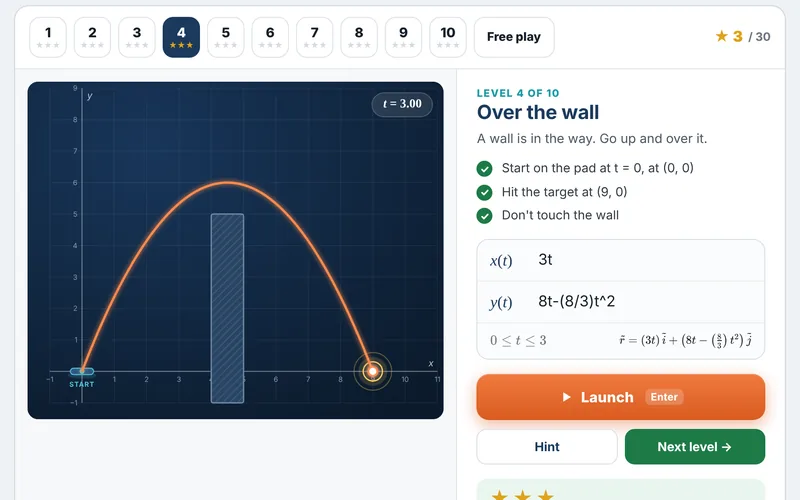
Hit the target
A parametric equations game for Specialist. Type x(t) and y(t), launch, and watch the particle fly. Ten levels: clear walls, arrive on time, use real gravity and loop back to the pad.
Found a bug, spotted a wrong answer or have an idea for a tool? Send feedback. It goes straight to me.